.

.

Sunday, September 04, 2011

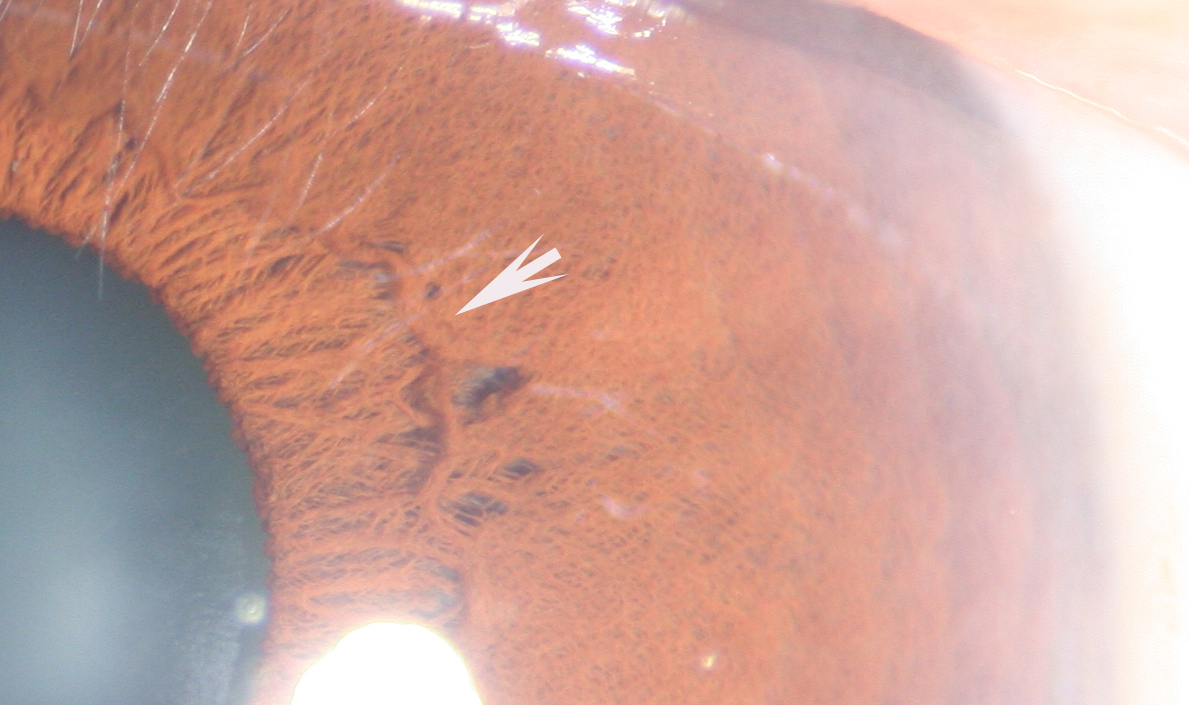
Solitary Melanin Pigment Located Inside the Pupillary Zone & IPB Structure - (urai)

Rx
Lx

For your case study...........look for the pigment location that nearest to the IPB..205' represent greater impact on the constitution

Local Absence of the IPB - (kanso)

Lx-IPB

For your case study...... absence of the IPB manifest an importance of  Space Risk analysis.

Saturday, September 03, 2011

Extroflession of the IPB, Frontal Flatness, Linear & Local Absent of the Collarette - (thn)

Rx

Lx

for your case study.....appreciation for the dynamic of the IPB & Collarette structure providing  Iridologist with wealthy  of genetic information on the constitution.

Classical & Embryological - Inner Pupillary Zone & Border Collarette - (than)

Rx

Lx

for your case study.....the dynamic of the Collarette structure Vs Ciliary Zone...in Hematogenic Constitution

Incremental of Pupil Flatness & Bridge Collarette - (tet)

Lx,Female


For your case study.......
1) the most impact is the smallest and  incremental one...298'~317' = 18mm !
2) do you observe that whether a bridge collarette in Brown Iris Constitution is greater than other constitutions ?  

IPB Morphologies, Space Risk, Pupil Flatness, Embryological & Classical - (sook)

Rx,Male,73


Lx


For your case study........The appreciation of an importance of IPB & Pupil analysis - IPB Morphologies, Space Risk & Pupil Tonus proceed to Embryological then only to Classical analysis....

Friday, September 02, 2011

Initial Formation of Pterygium - (sla)

Lx

IPB Archeology & Solitary Defect Markings - (sep)

Rx

IPB Archeology - N Sign

Lx

Solitary defect marking manifest in great impact on the affecetd areas - lung deficiency.

Extroflession of the IPB Structure - Space Risk - (sab)

Lx-IPB

1) 270' - Space Risk 12 concern with liver stress and hepatic immunity
2) 300' - Space Risk 7 tendency to thyroid dysfunction.

Consideration of Iris Pigments - Color, Size, Location, Distance- (ram)

Rx
- Choose the pigment that nearest distance to the Collarette or Pupil - 230'
- Look for the smallest and tiny size of the pigment - 220'
- Look for the darkest color pigment - 160'
- Consider the topographical reflex areas.

Lx

Which of the structural signs or pigments will you be first considered to analyse or which genetic sign is the most impact for that person?

Superior Temporal Flatness - (puspa)

Lx,Famle,24

Superior Temporal Nasal - 13'~60' suggest relates to hearing and balance problems. Possible muscular tension in neck and shoulder !

Uneven,Irregular Shapes of the Frontal IPB Structure - (nsl/osh)


Erratic Frontal IPB Structure indicate tendencies to :
- Hypothalamus and limbic system compromised.
- Psycho emotional imbalance.
- Low resistance to emotional or physical trauma.
(John Andrews, Iris & Pupillary Signs, 3rd)

Squared IPB Structure - (nao)

Lx,Female,40

Multiple of Squared IPB located in the frontal of the IPB structure indicate tendency to thyroid dysfunction, genetic family history of hypothyroidism.

Whitened IPB, Morphologies, Archeology & Pupil Flatness - (katir)


Rx-Pupil

a) IPB Archeology - 1 N
b) & d) IPB Morphologies - Triangle & Globular Signs.
c) Whited patches covered the surface of the pupil and the IPB structure, pre-mature ageing and oxidative stress condition.


Lx-Pupil - Cataract

Medial Nasal Flatness - indicates tendency to breathing problems and thyroid gland imbalance.

Melanin Pigments - Inner Pupillary Zone - Embryological & Emotional - (ibr)

Lx-Collarette

various brown pigments located inside the pupillary zone, search for a pigment that located nearest to the IPB.
a) 355' - Nearest to the IPB - indicates stress in hypothalamus and medulla oblongata disturbances, possible breathing difficulties.
b) 335' located inside the collarette border - indicates stress in right peritoneum and potential disturbances in transverse colon.
c) 15' located outside the collarette border - indicates stress in pituitary gland and tendency to have bronchitis problem.

IPB - Morphologies, Space Risk & Major Radial Furrows - (mal)

Rx

1) Squared IPB formation in frontal section...tendency to thyroid dysfunction.
2) Globular IPB formation in the frontal section concern with dybiosis.
3) Space Risk 10 at 288' concern with lung stress..

Lx

1) Space Risk 10, 7 & 5 at 287', 303' & 325' - relates to lung stress, thyroid dysfunction, tonsillitis and pharyngitis. Please take note the inter-relationship of IPB Morphologies & Space Risk, both can be counter check and confirm for the patient constitution genetic weaknesses under multidimensional approach.
2) An importance finding of  deep radial furrow / major ray penetrating from the IPB to the iris limbus at the frontal brain zone of 355' indicates hypothalamus and bronchus stress.
3) Selecting the most deepest rays either emanate from the IPB or Collarette border : 13', 24', 35', 65', 148', 186', 198' and 230' the radial furrows can be interpret in embryological and classical approaches. A condition of the ray must penetrated to the topographical areas of inner pupillary zone under embryological analysis ! Shall I leave it to you for analyze the radial furrows...

IPB - Morphologies, Spinal Reflex & Space Risk - (mal)

Rx

1) Wave Formation in the frontal section of the IPB structure indicates immuno compromise and suppression of expression.
2) Neurolappen or Nerve Rags sign, hyperthrophy of the local IPB.
3) Local absence of the IPB - 60' & 75' - Space Risk 8 & 10.

Lx

Local absence of the IPB - 255', 270', 305' & 350' triggered by the Space Risk & Spinal Reflex Analysis :
a) Space Risk 15, 12, 7 & 1 indicates Spleen deficiency, liver disturbances, thyroid insufficiency and tendency to brain fatigue, low nerve energy, headache, migraine, vertigo and insomnia.
b) Potential stress in the spinal of Thoracic & Cervical Vertebrae.

Absence & Linear Collarette - (lsh)

Lx

1) Linear collarette structure at 4'~ 65' relates to hyperinsulinaemia tendency and general hypolgycaemia tendency, according to John Andrews researched.
2) Local absence of the collarette at the nasal section of the collarette - 270'~282' the absence section adjacent to the affected areas of bronchial, tendency to have bronchitis problem. It also refer to as Time Risk sign, suggest time of separation....

Melanin Pigment attached to IPB, Hyperthrophy Collarette with Indented Lacunae - (lpk)


Rx, Female, 75

1) Brown pigment attached on the local IPB structure indicate possible a severe problem of trachea, chronic tracheitis - Space Risk 8 !
2) Indented lacuna located at 40' embryological relate to stomach disturbances and classical relate to frontal sinus problem.
3) Penetrated lacunae with bridge collarette at 75' predisposition to thyroid dysfunction.
4) Closed lacuna attached the border of the collarette - 115' suggest thymus sign, immunological deficiency.

The three structural signs can be classified as an importance Time Risk factors for calculating the time of the traumatic or stress events happened to the person.

Hyperthrophy & Whitened IPB, Pupil Flatness, Squared Collarette - (lks)

Lx-Pupil

1) Local hypertrophy of  IPB structure - Neurolappen / Nerve Rags - psychological barriers - tendencies to have nervous sensitivity, stress and tension, anxiety, insomnia and depression condition.
2) Lateral Temporal Flatness - predisposition to circulatory and asthma problems.
3) Whitened IPB indicates premature ageing, oxidative stress and tendency to osteoporosis, according to
J. Andrews researched.


Squared Collarette - Tendeny family history of diabetes mellitus.

Cataract & Pigment Dipersion Syndrome - (lak)

Rx

Lx

IPB Morphologies & Space Risk - (rag)


Rx-IPB

IPB Morphologies & Space Risk Analysis :
a) Triangle Sign... indicate gastrointestinal disturbances and liver stress involvement !
b) Rectangular Wall Sign...tendency to gastrointestinal disturbances !
c) Local absence of the IPB - 40', 65' & 255' -
1) Space Risk 5 - relate to respiratory problems.
2) Space Risk 8 - relate to trachea, whooping cough.
3) Space Risk 15 - Spleen deficiency, immunological imbalance.

Linear Bridge Collarette in Ventral Section - (kwt/kys)


Rx,Male,18 - Elder brother


Rx,Male,16 - 2nd brother

Both of them having a Linear & Bridge collarette structure in the ventral section of the collarette, they are genetically inherited tendencies of  hypoglycaemia and progesterone deficiency.

Gigantic Lacuna - (gol)

Rx

Gigantic Lacuna attached to the classical topographical area of pancreas - 300' suggest blood sugar imbalance. Gigantic lacuna indicate a tendency family history of diabetes mellitus.

Melanin Pigments in Pupillary Zone, Linear Collarette - (gbh)

Rx

Linear collarette - 240' ~ 280' located in the temporal section of the collarette suggest tendency to hypoglycaemia.

Lx

Melanin pigments located inside the inner pupillary zone, the most important factor to be considered is the location of the pigment which nearest to the IPB location at 335' indicate the most impact on the affected embryological area of bronchus, possible severe bronchitis. The other pigment located nearest attached to the inside border of the collarette indicate potential stress in pituitary and cerebellum.

Contraction Furrows Breaks in Lung Zone - (cyn)

Rx

1) Contraction Furrows breaks in the lung reaction field which amplify the weakness in the affected area.
2) Closed lacunae attached on the collarette - 280' & 295' indicates heart and pancreas signs.
3) Crypt located in the lung zone suggest lung insufficiency and amplified by the breaks of the contraction furrows

Sectoral Dark Brown & Constricted Collarette - (faz)

Rx

Sectoral dark brown pacthes of pigment : a-a cover the vertical half section of the iris, it can be called as Sectoral Heterochochromia. The Sectoral Heterochromia is a genetic marking, normally it linked with to birth defects or damage within the womb, it is an embryological marking.


Pigmented brown attached on the IPB structure.
Lx
Constricted Collarette - Tendency to constipation, poor peristalsis and sluggishness of the intestines. Psyco-emotion tend to self contained and introvert.

Differentiation of Genetic Signs in relation to Liver, Gall Bladder, Pancreas - (chandra)

Rx, Female, 55

1) Chronic level of closed lacuna located at 178' - concern with adrenal stress and fatigue.
2) Closed lacuna at 185' refer to as kidney stress.
3) Brown pigment topostabile located in the liver reflex zone - 230' indicate liver disturbances, bear in mind that liver does not produce genetic lacuna in it reflex zone ! if does refer to either pancreas or gall bladder !!
4) Crypts located outside border of the collarette - 230' indicate as gall bladder deficiency !
5) Crypt attached on the collarette border - 240' indicate pancreas dysfunction !

Lx

Possible of Asparagus lacuna attached to the border in the ventral section of the collarette indicate potential cysts in uterus, ovary or cervix.

IPB Morphologies & Glandular Signs - (cha)

Lx,Female,35

IPB Morphologies - The IPB structure similar to Omega sign (75%), if confirmed it indicates:
a) Overactivity of the immune system.
b) Tendency to tonsillitis and rheumatoid arthritis.
c) Unexpressed anger and mood swings.
(John Andrews, Iris & Pupillary Signs, 3rd )

Rx

1)  Closed lacunae attached on the collarette in the humoral zone indicates glandular system disturbances - 240', 275' and 300' represents pancreatic dysfunction, blood sugar imbalance and cardiovascular problem.
2) Internal crypts located inside the pupillary zone at 235' embryological refer to blood sugar imbalance.

Thursday, September 01, 2011

An Urgent Video Message from Dr. David J. Pesek